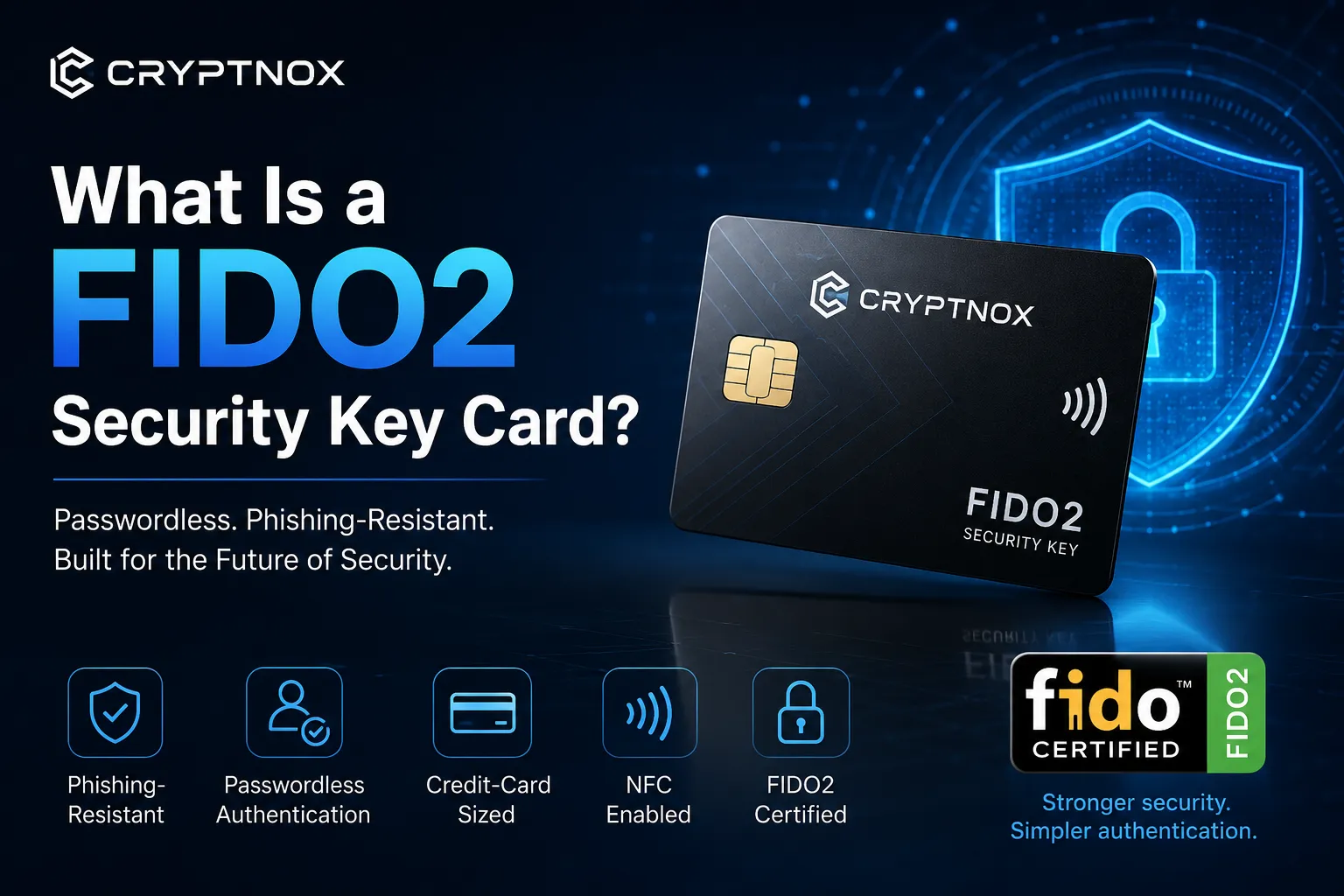
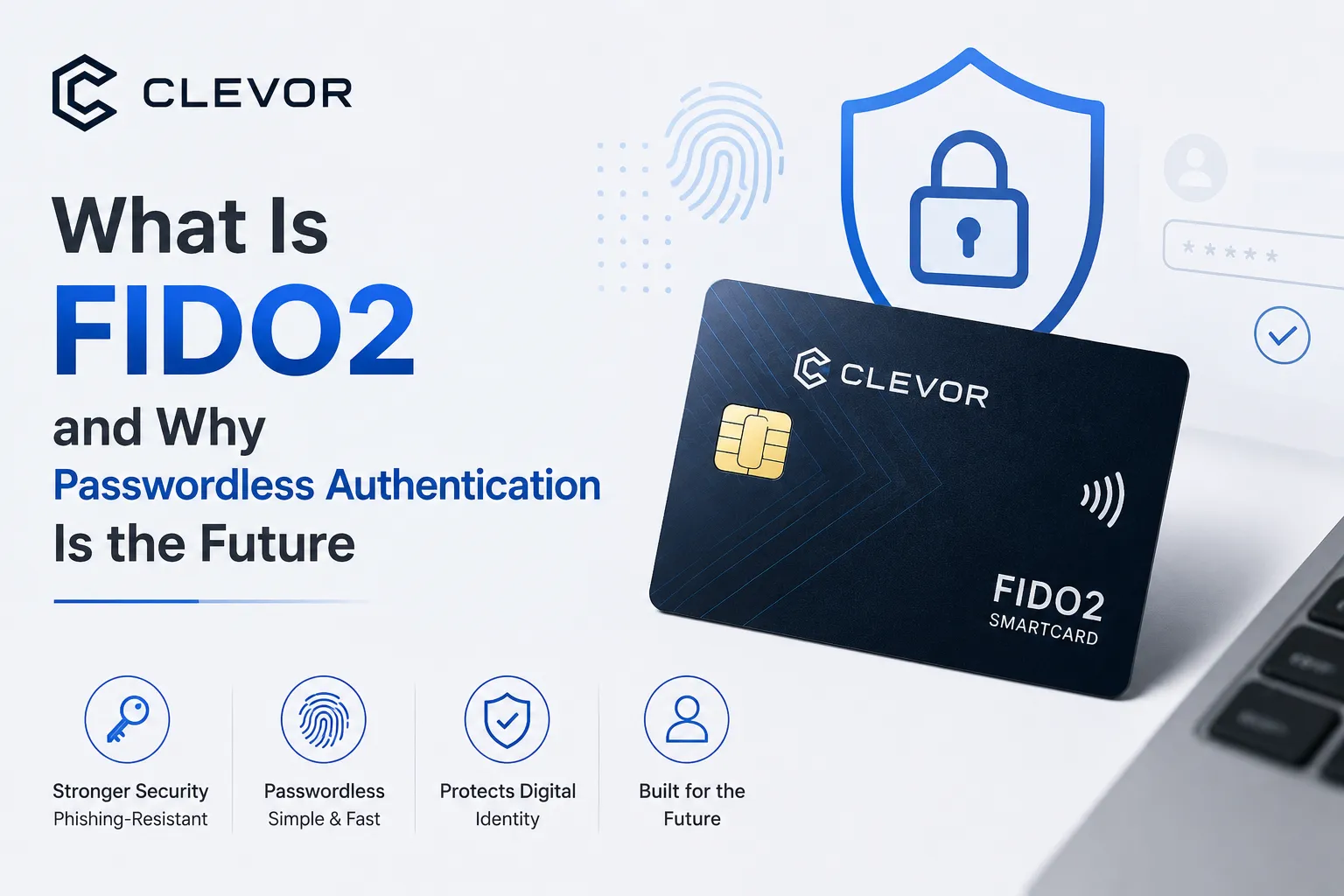
Cybersecurity is evolving rapidly as organizations and individuals face increasingly sophisticated phishing attacks, credential theft, and account takeovers. Traditional password-based authentication has become one of the weakest links in digital security, with stolen or reused passwords responsible for many data breaches. As a result, businesses are embracing passwordless authentication powered by FIDO2 standards. A FIDO2 smartcard offers a modern approach to authentication by replacing passwords with secure cryptographic credentials stored on a tamper-resistant smart card. This technology not only enhances security but also improves user convenience, making it an ideal solution for enterprises, Web3 users, and anyone seeking stronger digital identity protection.
What Is FIDO2?
FIDO2 is an open authentication standard developed by the FIDO Alliance in collaboration with the World Wide Web Consortium (W3C). It enables passwordless authentication through public-key cryptography, eliminating the need for traditional passwords while significantly reducing the risk of phishing attacks.
Instead of relying on passwords that can be stolen or reused, FIDO2 creates a unique cryptographic key pair for every registered account:
-
A public key stored by the service provider.
-
A private key securely stored on the user’s authentication device.
When logging in, the private key signs a cryptographic challenge without ever leaving the device, making credential theft extremely difficult.
How Does a FIDO2 Smartcard Work?
A FIDO2 smartcard securely stores cryptographic credentials within an embedded secure element. Unlike software-based authenticators, sensitive private keys never leave the card, ensuring they remain protected even if a computer or mobile device becomes compromised.
The authentication process is simple:
-
Register the smartcard with a supported application or website.
-
The service generates a unique cryptographic key pair.
-
The public key is stored on the server.
-
The private key remains securely inside the smartcard.
-
During login, the card signs a cryptographic challenge after verifying the legitimate website.
This process ensures that authentication is resistant to phishing attacks because credentials cannot be reused on fraudulent websites.
Modern solutions such as a FIDO2 smartcard combine enterprise-grade security with the convenience of a compact, credit-card-sized form factor.
Why Passwordless Authentication Is the Future
Passwords have become increasingly difficult to manage. Employees often reuse passwords across multiple services, while consumers struggle to remember complex credentials.
Passwordless authentication addresses these challenges by removing passwords entirely.
Key advantages include:
-
Protection against phishing attacks.
-
No password reuse.
-
Faster login experiences.
-
Reduced password reset requests.
-
Stronger identity verification.
-
Better user experience.
By replacing passwords with cryptographic authentication, organizations significantly reduce their attack surface while simplifying access for legitimate users.
Benefits of FIDO2 Smartcards
Enhanced Security
Unlike passwords or one-time passcodes, a FIDO2 smartcard uses public-key cryptography that cannot be intercepted or replayed by attackers.
Private keys remain securely stored within the card, making credential theft substantially more difficult.
Phishing Resistance
One of the biggest advantages of FIDO2 authentication is domain verification.
The smartcard authenticates only with the legitimate website it was originally registered with. Even if users unknowingly visit a fake login page, authentication will fail because the cryptographic challenge does not match the registered domain.
Improved User Experience
Employees and consumers no longer need to remember dozens of passwords.
Authentication becomes as simple as presenting the smartcard and completing any required verification step, creating a seamless login experience.
Enterprise Scalability
Organizations implementing passwordless authentication can improve workforce security while reducing IT support costs associated with password resets and account recovery.
FIDO2 in Enterprise Environments
Large organizations increasingly adopt FIDO2 authentication to secure access to cloud platforms, internal systems, and remote work environments.
Common enterprise use cases include:
-
Employee identity verification.
-
Remote workforce authentication.
-
Administrator account protection.
-
Cloud application access.
-
Zero Trust security frameworks.
-
Multi-factor authentication deployments.
As cyber threats continue evolving, passwordless authentication provides organizations with stronger protection while improving operational efficiency.
FIDO2 and Digital Identity
Digital identity has become one of the most important aspects of modern cybersecurity.
A secure digital identity enables individuals to safely access financial services, enterprise applications, healthcare platforms, government portals, and Web3 ecosystems.
FIDO2 strengthens digital identity by ensuring authentication relies on cryptographic proof rather than easily compromised passwords.
This creates greater confidence for both users and organizations while supporting secure digital transformation initiatives.
Can FIDO2 Benefit Web3 Users?
The blockchain and Web3 ecosystems prioritize user ownership and security. Many digital asset holders already rely on hardware-based protection for private keys, making FIDO2 a natural extension of that security model.
A FIDO2 hardware wallet helps secure access to wallets, decentralized applications (dApps), and blockchain services by providing phishing-resistant authentication while protecting valuable digital assets.
For individuals managing cryptocurrency, NFTs, or decentralized identities, combining self-custody with passwordless authentication offers multiple layers of protection against evolving cyber threats.
Best Practices for Using FIDO2 Authentication
To maximize security, users should follow several best practices:
-
Register multiple authentication devices where possible.
-
Store backup authentication methods securely.
-
Keep authentication devices physically protected.
-
Verify websites before authentication.
-
Keep systems and browsers updated.
-
Educate employees about phishing attacks.
These practices help ensure long-term protection while maintaining a smooth authentication experience.
Conclusion
Passwords alone are no longer sufficient to defend against today’s sophisticated cyber threats. A FIDO2 smartcard provides a modern, phishing-resistant authentication method that replaces vulnerable passwords with secure cryptographic credentials. By improving security, simplifying login experiences, and strengthening digital identity, FIDO2 is becoming the foundation of passwordless authentication across enterprises, financial services, and Web3 ecosystems. As organizations continue adopting Zero Trust security models and individuals seek better protection for their digital lives, FIDO2 smartcards will play an increasingly important role in shaping the future of secure authentication.