Your mother opens the jewellery box and lifts out the necklace she wore on her wedding day. In your hand, it looks smaller than you remember from her photographs. Once she fastens it, the pendant settles just below your collarbone, exactly where you had pictured an embroidered blouse edge. That little overlap is a good reason to choose your bridal lehenga with the necklace already in mind. The rest of the outfit can take its shape from the piece you most want to wear.
Where the Pendant Naturally Falls
Fasten the necklace at a comfortable length and wear it for a few minutes. An adjustable cord can slip a little as the weight of the pendant settles. In front of a mirror, measure from the hollow at the base of your throat to the pendant’s lowest point. Note the measurement and the hook or cord setting you used. If the necklace stays at home during the first appointment, those two details will help your tailor mark where the pendant falls on you.
Colour Begins With the Stones
Your mother may have worn the necklace against crimson silk, but a different shade can bring out something you never noticed in it. With the necklace on, hold a maroon swatch beneath the pendant, then try rose pink or warm ivory in the same light. Look particularly at any coloured stones, enamel or pearls along the lower edge. A tiny green enamel leaf can disappear against one fabric and look beautifully distinct against another. Take both favourites to a window before making up your mind.
Give Embroidery and Gold Room
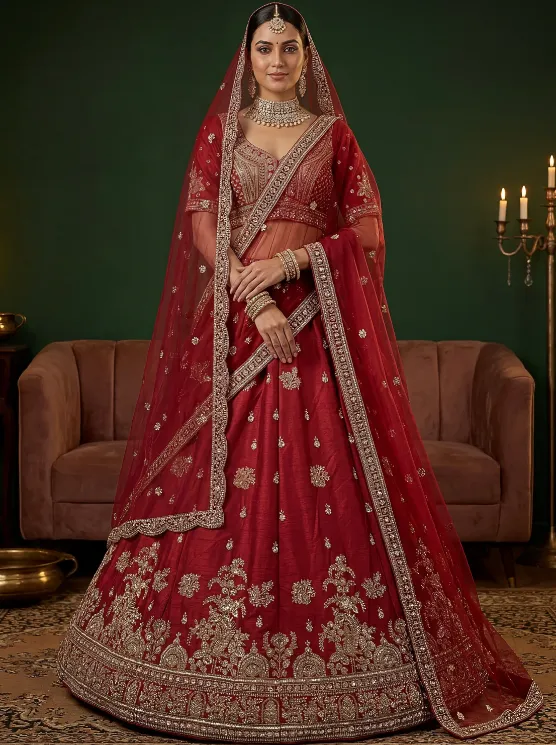
Embroidery deserves a closer look when you have a necklace with an elaborate centrepiece. One red silk set in the Heavy Bridal Lehenga Choli collection includes unstitched blouse fabric already decorated with sequins and dori work. Before cutting, have the tailor place the embroidered panel against you and lay the necklace over it. A small change in the curve of the neckline may give the pendant a clear outline while preserving a favourite motif or a row of cord embroidery you particularly like.
When the Blouse Sits High
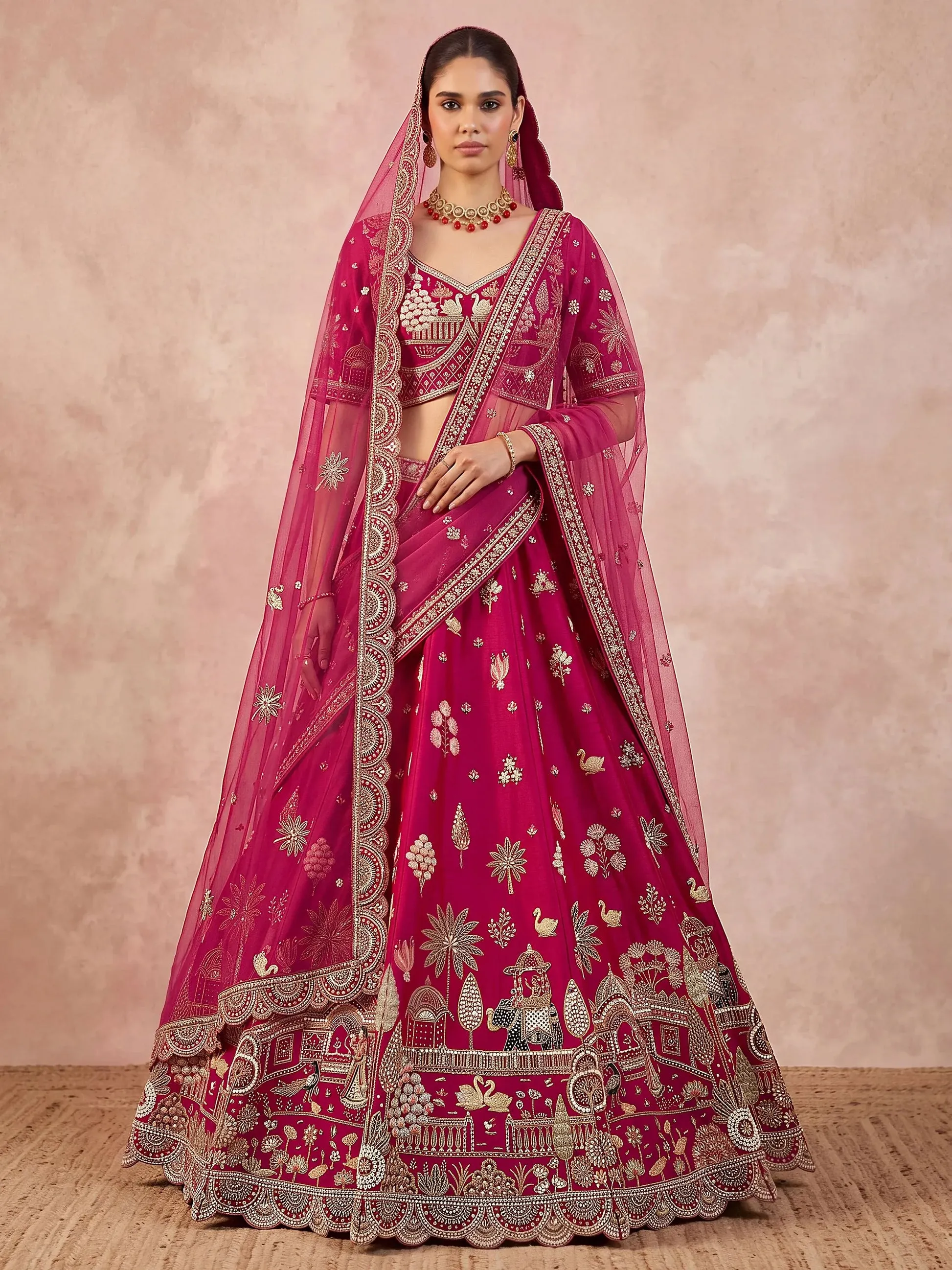
Sometimes the blouse you love has a high neck, and you want to keep it that way. Try the necklace on top of the fabric. A broad gold piece can look striking against a plain panel, provided it lies flat when you turn your head. Feel along the back of the pendant for anything that might catch a loose thread. Once you and your tailor agree on the placement, jot down the details that would be difficult to reconstruct at the next fitting.
-
Hook or cord setting for the necklace.
-
Finished neckline depth on the blouse.
-
Space beneath the lowest pendant drop.
-
Embroidery to preserve near the collarbone.
-
Position of the blouse fastening.
Two Dupattas Around One Necklace
Give the dupatta its own fitting with the necklace fastened. A deep red set with a detailed blouse back and two matching dupattas gives you several borders to arrange. If one will cover your head, put it on first and bring the second across your shoulder as you plan to wear it. Now turn towards your mother as though she were speaking from beside you. She can see whether the hanging edge slips over the pendant and help find a better position.
The Order of Getting Dressed
Decide who will fasten the necklace on the day, especially if it has an old hook that your mother can work by touch. Have her try it once with your blouse closed and your hair arranged roughly as planned. A low bun might cover the clasp at the nape, while a blouse that slips on over the head needs to go on before the necklace. Agreeing on the order gives you one less decision to make when the flowers arrive, and everyone needs the mirror.
Conclusion
When the fitting is over, give your mother a moment to see the outfit before you turn back towards the mirror. She may remember why she chose that necklace, or who fastened it for her. Write down a detail from her story in her own words and keep it in the jewellery box. On your wedding morning, the neckline will sit where you wanted it, and the clasp will already be familiar. What you’ll carry into the ceremony is a little more of her history.